Paul and Ellen's 2025 cruise |
Table of Contents |
Orkney Islands
warmer weather and richer soils. It was ideal for farming, hunting and fishing.
|
||||
Orkney Islands |
||||
|
|
|||
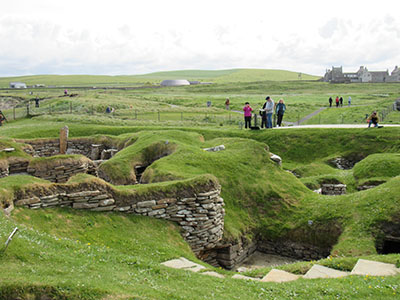
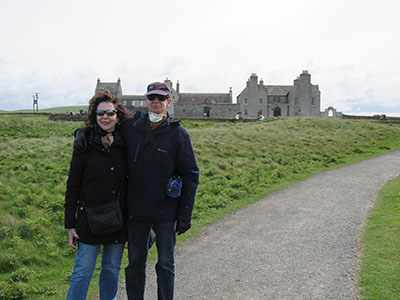
| This is the heart of Neolithic Orkney. | Skaill House is the home of the current Laird of Breckness and one of his predecessors discovered the Neolithic village. | |||
|
|
|||
| In the winter of 1850, a severe storm stripped earth from a large irregular knoll, revealing underground structures on the property of Skaill House. | Skara Brae is Europe's most complete Neolithic village. Older than Stonehenge and the Great Pyramids of Giza, it has been called the "Scottish Pompeii" because of its excellent preservation. | |||
|
|
|||
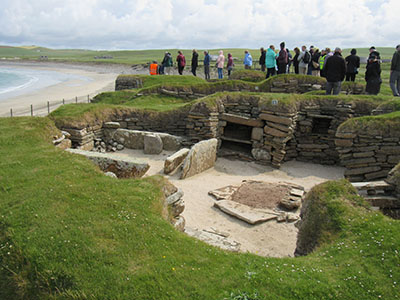
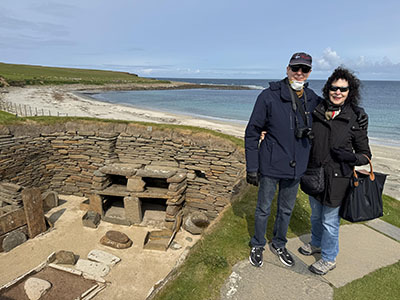
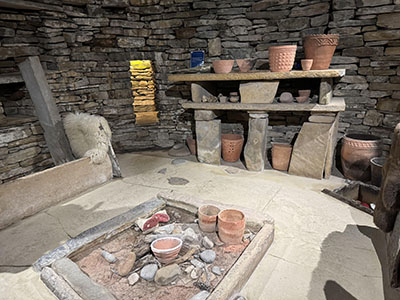
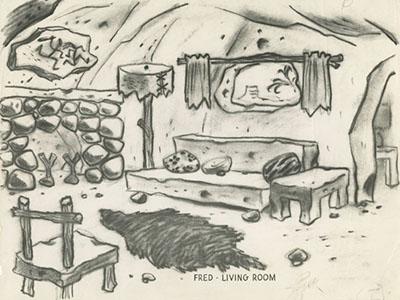
| Skara Brae was occupied for 600 years (3,100 BC-2,500 BC). Here's one interior. | Doesn't it look like a Flintstones' dwelling? | |||
|
|
|||
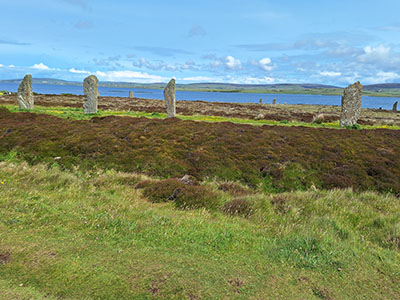
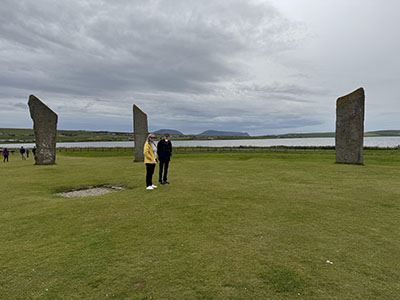
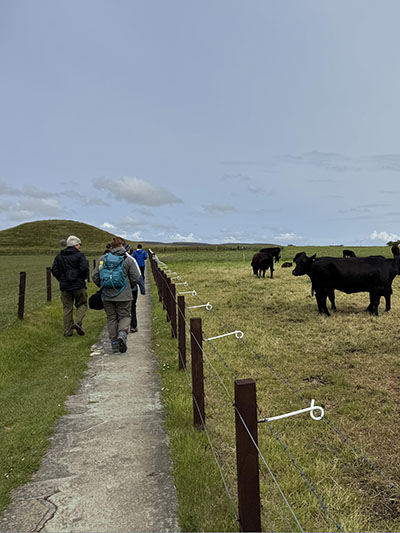
| The Ring of Brodgar is an enormous stone circle from the 3rd millennium BC. It has 36 of the original 60 stones and is fenced off because of erosion caused by tourists. | The Stones of Stenness circle, on the other hand, is open to all. There are 4 of 12 stones left. We had a great guide Inga (in yellow) of Orkney Inga Tours. She took us to all the Neolithic sites plus lunch in a family restaurant overlooking a loch (lake). | |||
|
|
|||
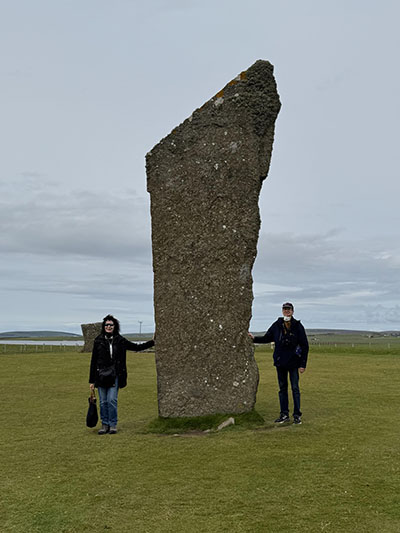
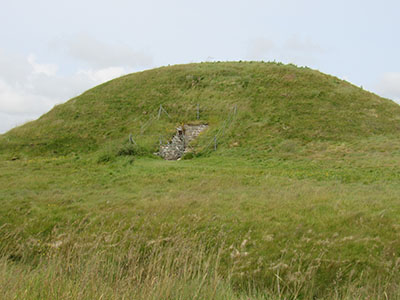
| You can touch the Stones of Stenness. | The mound ahead is a monumental burial chamber, Maeshowe Chambered Cairn, the finest Neolithic building to survive in northwest Europe. | |||
|
|
|||
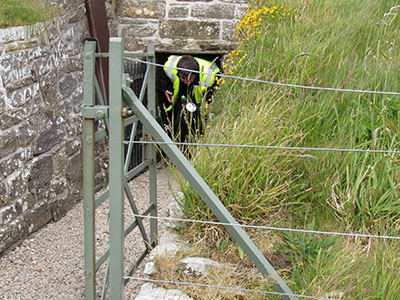
| For 3 weeks before and after the winter solstice, the light of the setting sun shines straight down the passage and illuminates the back of Maeshowe's central chamber. | You have to stoop to enter Maeshowe. An archaeologist gave a presentation. Photography inside is not permitted. | |||
| Notice Orkney’s almost treeless landscape. In Neolithic times, there were significant forests, warmer weather and richer soils. It was ideal for farming, hunting and fishing. |
||||
| next | ||||
| created by webstarlines.com | ||||