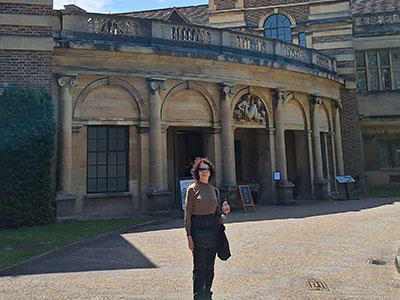
After centuries of neglect, Eltham Palace was leased to Stephen and Virginia Courtauld in 1933. They built an Art Deco house attached to the only salvageable room, the original Great Hall.
It is a unique marriage between the Tudor palace in which Henry VIII grew up and a 1930s Art Deco mansion of millionaires.
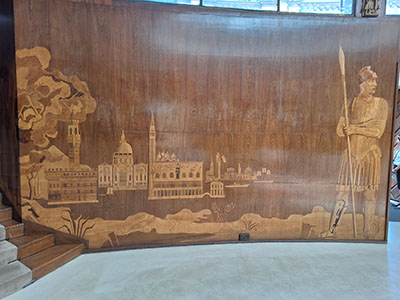
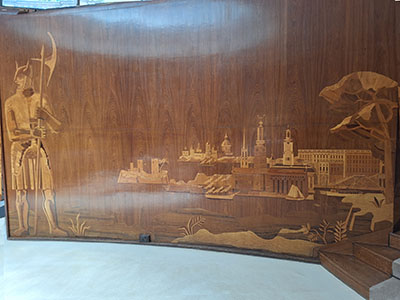
The entrance hall has marquetry panels with motifs depicting a Viking and Roman soldier with Florentine and Venetian palaces, 1920s Stockholm architecture and the Courtaulds' prized motor yacht, Virginia.
Stephen Courtauld inherited a fortune from his family's textile firm.
His older brother ran the business
and founded the Courtauld Institute of Art.
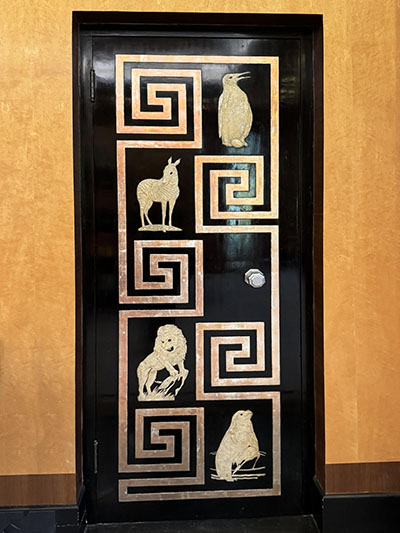
The doors of the Art Deco dining room feature animals and birds drawn from life at the London Zoo
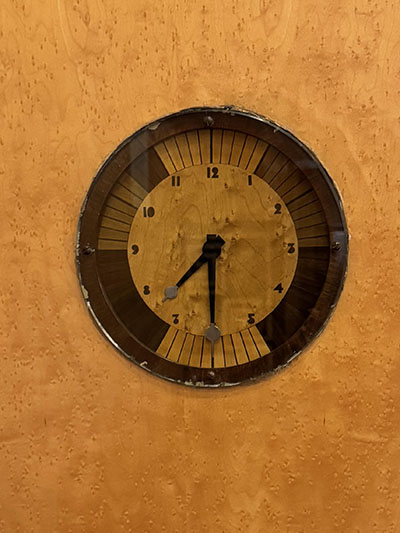
The Courtaulds took advantage of new technology. The built-in clocks were synchronized.
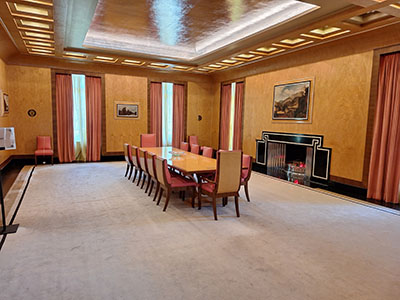
The Art Deco dining room has an aluminium-leaf ceiling.
The dining table and chairs are replicas, made in 1998 after the originals were rediscovered in 2001 at Pinewood Studios.
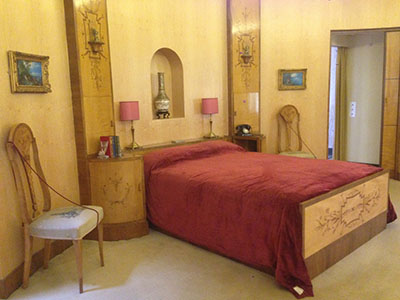
Many of the bedrooms reflect the Cunard style made popular by the fashionable cruise liners of the time, featuring built-in furniture and smooth veneered surfaces, often with curved ends.
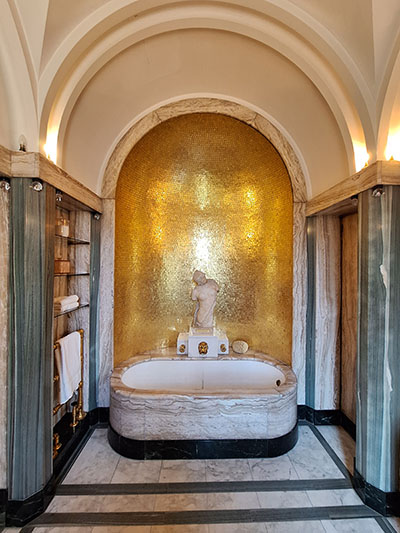
Virginia Courtauld’s vaulted Art Deco bathroom, lined with gold mosaic and onyx has gold-plated bath taps and a statue of the goddess Psyche.
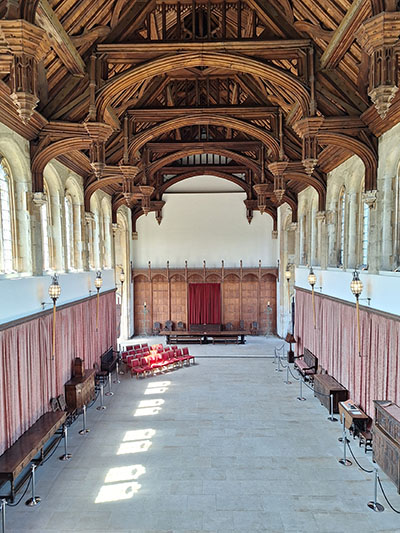
The Great Hall was built in the 1470s for Edward IV for dining, entertaining and receptions.
The Courtaulds had a minstrels’ gallery added at one end so they could use it as a music room.
There's a pastoral tearoom behind the palace.
Hampton Court Palace—home of King Henry VIII
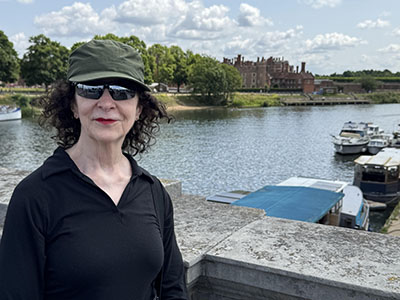
Hampton Court Palace is on the River Thames upstream of central London.
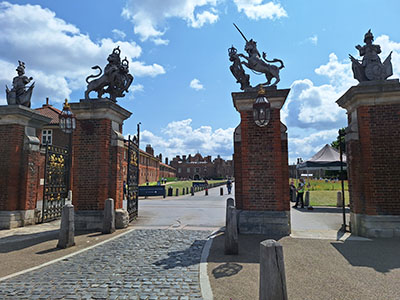
Its Trophy Gate features sculptures depicting the Lion of England, the Unicorn of Scotland and Trophies of Arms.
It was built in 1514 for Cardinal Thomas Wolsey, Archbishop of York/chief minister to Henry VIII, but when Wolsey fell out of favor, he gave it to the king who enlarged it to accommodate his many courtiers.
A cast of actors gave a short, comedic play, "The Missing Plate."
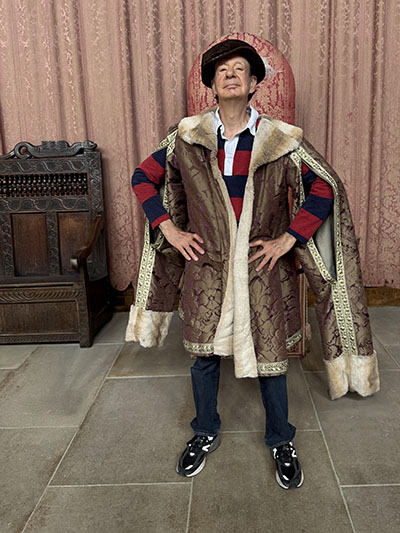
We ran into King Paul VIII.
There is a Royal Chapel within Hampton Court Palace.
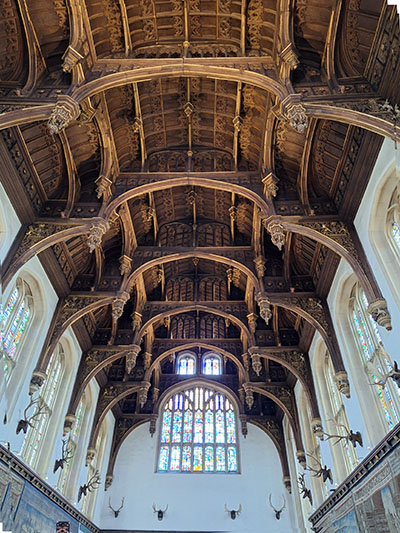
The Great Hall was added by Henry VIII. The immense timber hammerbeam roof was built by royal shipwrights and designed to be strong without columns—like a warship. There are carved H's & A's (Henry & Anne) and the falcon badge of Anne Boleyn—reminders of her 3 years as Queen. (It is also believed that some of Shakespeare's plays were first performed here.)
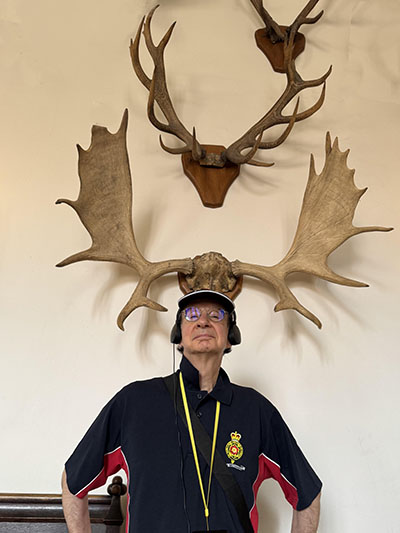
Paul got horny!
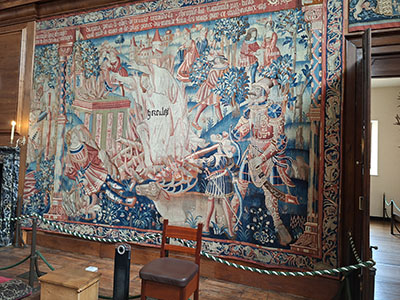
The Labours of Hercules is a Brussels tapestry from the 1540s, in the King's Presence Chamber—a grand room which served as official throne room where the monarch held audiences, received guests and conducted formal state business.
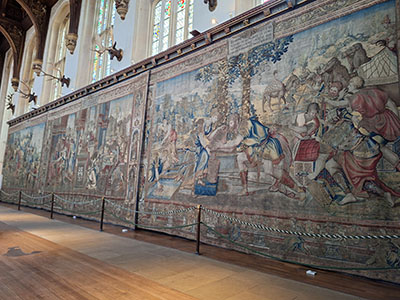
The Abraham tapestries are a set of 10 Brussels tapestries from 1543, depicting stories about the biblical prophet Abraham, hanging in what was probably the original intended location, the Great Hall.
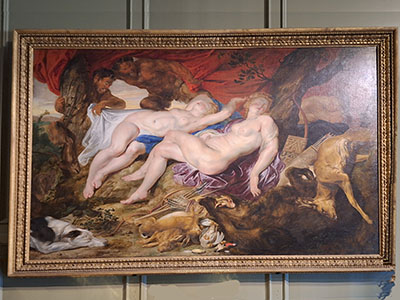
Diana and her Nymphs Spied upon by Satyrs, c.1616 by Flemish artist Peter Paul Rubens. (Artworks at Hampton Court Palace belong to the Royal Collection and are subject to change.)
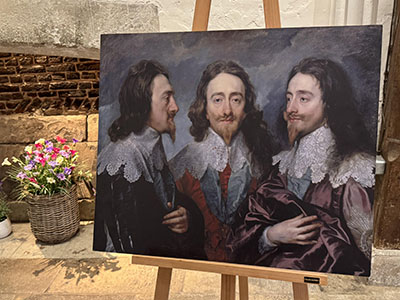
The three faces of Charles! Charles I in Three Positions aka Triple Portrait of Charles I c.1636 by Flemish artist Anthony van Dyck (also part of the Royal Collection).
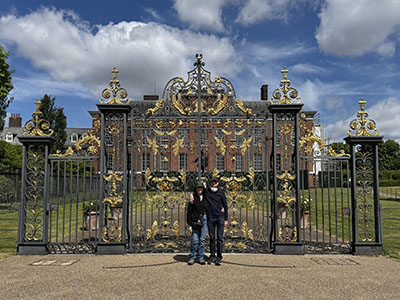
Kensington Palace—childhood home of Queen Victoria
Kensington Palace has been a royal residence for the British royal family since the 17th century. It's currently home to the Prince and Princess of Wales, the Duke and Duchess of Gloucester, the Duke of Kent, Prince and Princess Michael of Kent and Princess Eugenie and her husband Jack Brooksbank. (Can you imagine living with so many relatives?!)
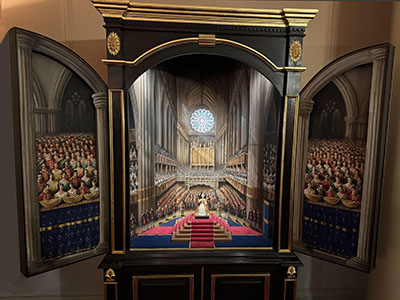
Diorama of 19-year-old Queen Victoria's coronation on June 28, 1838 in Westminster Abbey, which sounded like a disaster! The ceremony took 5 hours without rehearsals. The coronation ring was forced on her wrong finger. An elderly peer fell down the steps while making his homage to the Queen. And a confused bishop wrongly told her the ceremony was over so she had to return to finish the service.
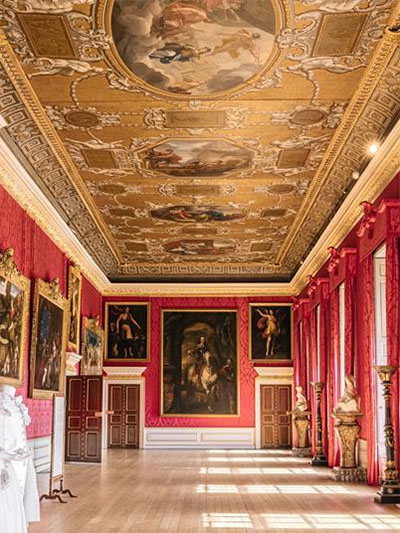
King’s Gallery was designed by Christopher Wren as part of Kensington Palace's expansion for William III in 1695. Here William met with spies and planned military campaigns, played soldiers with his nephew/intended heir—the Duke of Gloucester—and died from pneumonia after falling from his horse at Hampton Court Palace.
In the King's Gallery, the dial positioned over the fireplace was connected to a wind vane on the roof. This enabled William to see which way the wind was blowing and where his navy was likely to be heading. It still works!